
How to remove salt residue from outdoor terrace floors
Introduction
Living near the coast in the Dominican Republic brings beautiful ocean views, but it also introduces a persistent challenge: salt spray. Salt residue frequently accumulates on outdoor terrace floors, leaving behind a white, crusty film that can be both unsightly and damaging. If left untreated, this salt can penetrate the pores of stone, tile, or concrete, leading to erosion, discoloration, and structural degradation over time.
Removing this residue is essential for maintaining the aesthetic appeal of your outdoor living spaces and extending the lifespan of your flooring materials. It is particularly important to perform deep cleaning after heavy sea breezes or following the rainy season when salt concentrations become more visible. By understanding the right cleaning techniques, you can restore the original beauty of your terrace without causing permanent damage to the surface.
Why salt residue damages terrace floors
Salt is an aggressive agent when it comes to home maintenance. When salt spray lands on your terrace, the water evaporates, leaving behind concentrated salt crystals. These crystals are hygroscopic, meaning they attract moisture from the air, which keeps the surface damp and facilitates chemical reactions.
On porous materials like natural stone, travertine, or unsealed concrete, salt can enter the tiny pores of the material. Through a process known as crystallization, the salt expands as it dries, putting internal pressure on the material's structure. This can lead to surface scaling, pitting, or even cracking. On polished tiles, salt buildup can dull the finish, making the floor look perpetually cloudy or dirty regardless of how much you sweep.
Necessary tools and cleaning solutions

Before beginning the cleaning process, it is vital to gather the correct supplies to avoid scratching the surface or using overly harsh chemicals that might strip sealants. The approach varies depending on the severity of the buildup.
For light maintenance, simple household items are often sufficient:
- A soft-bristled broom for removing loose debris and dried salt.
- A high-pressure garden hose to rinse away surface crystals.
- Mild dish soap or a pH-neutral cleaner specifically designed for stone or tile.
- A soft scrubbing brush (avoid wire brushes as they can scratch stone).
- Microfiber cloths or squeegees to prevent water spots during drying.
For heavy accumulation, you may need a more specialized solution, such as a mild acidic cleaner designed for masonry, but this should only be used after testing a small, inconspicuous area to ensure it does not discolor the floor.
Step by step process to clean salt buildup
Cleaning a terrace requires a methodical approach to ensure that the salt is fully removed rather than just moved around. Follow these steps for the best results:
- Dry sweeping: Start by sweeping the entire terrace with a soft broom. This removes sand, dirt, and loose salt crystals. If you skip this step, you may end up creating a "salt slurry" that is much harder to clean and can smear across the floor.
- Pre-rinsing: Use a garden hose to rinse the floor thoroughly. The goal is to wash away as much surface-level salt as possible using only water. For many terraces, this step alone solves a significant portion of the problem.
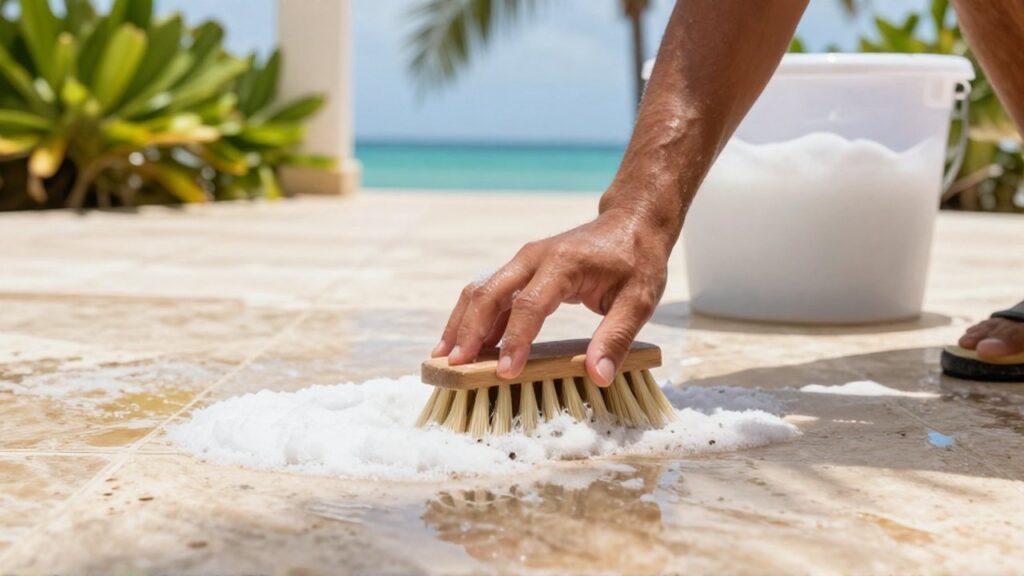
- Scrubbing with solution: Mix a small amount of pH-neutral cleaner with warm water in a bucket. Apply the solution to the floor and use a soft-bristled brush to scrub the affected areas. Focus on the grout lines and any visible white patches.
- Deep rinsing: Once the scrubbing is complete, rinse the terrace again with plenty of fresh water. It is crucial to ensure that no soapy residue is left behind, as this can attract more dirt later.
- Controlled drying: If possible, use a squeegee to push excess water toward the drains. Allowing the floor to dry naturally in the sun is helpful, but preventing standing water helps avoid new salt deposits forming as the water evaporates.
Preventative measures for outdoor flooring

Once your terrace is clean, you can implement several strategies to minimize the frequency of deep cleaning. The most effective method is applying a high-quality, breathable sealer specifically designed for your type of flooring. A sealer acts as a barrier, preventing salt crystals from penetrating the pores of the material.
Regular maintenance is also key. A quick rinse with fresh water after a particularly windy day or a storm can prevent salt from hardening and becoming difficult to remove. Additionally, keeping nearby vegetation trimmed can help reduce the amount of airborne sea spray reaching the terrace surface.
Common mistakes to avoid during cleaning
A frequent error is using high-pressure power washers too closely to the surface. While tempting, excessive pressure can blast away the protective top layer of stone or force salt deeper into the cracks if the surface is already weakened. Always maintain a safe distance and use a wide spray pattern.
Another mistake is using acidic cleaners (like vinegar or lemon juice) on sensitive stones like marble or limestone. These materials react chemically with acids, causing permanent etching and loss of shine. Always prioritize pH-neutral cleaners unless you are certain of the material's resistance. Finally, never scrub with metal brushes, as they leave behind tiny metal particles that will eventually rust, creating new stains on your terrace.
Frequently asked questions
How often should I rinse my terrace? It is recommended to give your terrace a light rinse with fresh water once a week or immediately after any heavy sea spray or storm to prevent salt accumulation.
Can I use vinegar to clean salt off my tiles? Do not use vinegar on natural stones like marble, limestone, or travertine, as the acidity will damage the surface. It may be used on ceramic or porcelain tiles, but pH-neutral soap is safer and more effective for regular use.
Will sealing my floor prevent salt damage entirely? A sealer significantly reduces the risk by preventing salt from penetrating the material, but it is not a permanent solution. Sealers need to be reapplied periodically to remain effective.
Why does my floor look cloudy even after cleaning? Cloudiness is often caused by salt that has penetrated the surface or by dried mineral deposits from the water used for cleaning. A deep scrub with a pH-neutral cleaner and a thorough rinse is usually required.
Leave a Reply