
How to check home structural safety after typhoons
Introduction
After a typhoon passes, the immediate instinct is often to assess cosmetic damage or clean up debris. However, performing a systematic structural safety check is a critical step to ensure that your home remains a secure environment for your family. Identifying hidden vulnerabilities early can prevent catastrophic failures, such as roof collapses or foundation shifts, which may occur days or even weeks after the storm has ended.
A thorough inspection serves to distinguish between minor repairs and serious structural issues that require professional intervention. By following a logical sequence of checks, you can identify cracks, leaks, and shifts that might be obscured by clutter or outdoor vegetation. This process is essential for maintaining the integrity of your property and ensuring long-term stability in regions prone to tropical storms.
Essential safety precautions before inspection

Before stepping outside to survey your property, ensure that the immediate environment is stable. Do not attempt to inspect your home if there are active hazards such as downed power lines, flooding, or unstable trees leaning toward the structure. Structural assessment should only begin once local authorities have declared the area safe and the weather has stabilized.
Check for the presence of gas leaks or electrical hazards before entering any part of the building. If you smell gas or see sparking wires, do not enter the premises; instead, contact the utility companies immediately. When performing an exterior inspection, wear sturdy footwear and protective gear, such as gloves and a helmet if you are working near fallen debris or unstable structures.
Exterior structural assessment steps
The first phase of a safety check involves an external walk-around to look for large-scale damage. Begin by examining the roofline for any visible sagging, missing tiles, or displaced shingles. Even if the roof appears intact from the ground, look for signs of uplift or gaps where wind could penetrate the attic space.
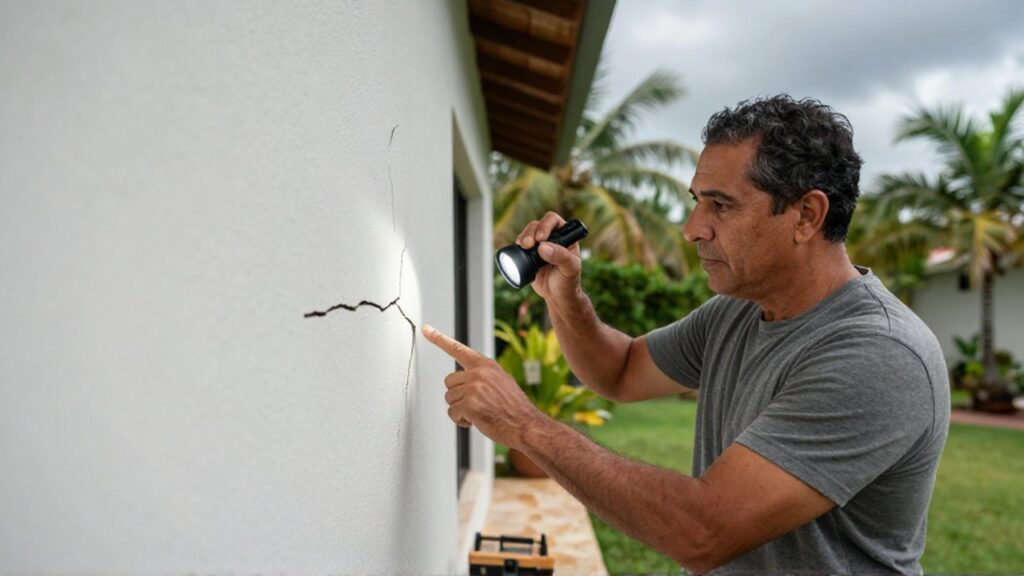
Next, inspect the walls and foundation of the house. Look for new, large cracks in the concrete, masonry, or stucco. While small hairline cracks are common in tropical climates due to thermal expansion, wide cracks or cracks that follow a diagonal pattern at the corners of doors and windows can indicate significant foundation movement.
Pay close attention to the following exterior elements:
- Foundations: Look for signs of erosion, soil shifting, or new gaps between the ground and the house base.
- Windows and Doors: Check if frames are warped or if doors no longer close properly, which may suggest the house has settled unevenly.
- Chimneys and Attachments: Ensure that chimneys, pergolas, or heavy decorative elements are still securely attached to the main structure.
Interior signs of structural compromise

Once the exterior is surveyed, move inside to check for signs of internal stress. The most common indicator of structural issues after a storm is the appearance of new cracks in interior walls or ceilings. Watch for cracks that appear suddenly or grow larger following high-wind events.
Water intrusion is also a major concern, as it can weaken structural components like wooden beams or drywall over time. Look for:
- Discoloration and Bubbling: Damp spots on ceilings or walls often indicate a breach in the roof or window seals.
- Floor Leveling: If you feel a slope in the floor or notice that rugs or furniture seem misaligned, this could be a sign of foundation instability.
- Door and Window Functionality: If doors suddenly stick or windows become difficult to slide, the structural frame may have shifted due to pressure or ground movement.
Determining when to call a professional
It is vital to distinguish between DIY maintenance and professional structural engineering. While minor repairs like replacing a few shingles or patching small cracks in paint can often be handled personally, certain indicators mandate the expertise of a licensed structural engineer or contractor.
You should seek professional assistance if you encounter any of the following: 1. Large diagonal cracks in the foundation or load-bearing walls. 2. Significant roof sagging or visible movement in the attic. 3. Persistent water leaks that appear to be coming from inside the walls or ceilings. 4. Doors or windows that are physically jammed due to frame warping. 5. Visible separation between different parts of the building, such as where a garage meets the main house.
Relying on a professional is not just about the repair; it is about obtaining a definitive assessment of the building's load-bearing capacity and long-term safety.
Frequently asked questions
Can a house be structurally sound if there is no visible exterior damage? Not necessarily. Wind pressure and water infiltration can cause internal damage, such as weakened ceiling joists or foundation erosion, that is not visible from the outside. Always perform an interior check.
How long after a typhoon should I perform the inspection? The inspection should be performed as soon as it is safe to do so. However, you should continue to monitor the house for several weeks, as some structural settling or moisture-related issues may take time to manifest.
Are small cracks in the walls always a sign of structural failure? In many cases, small, hairline cracks are caused by the natural expansion and contraction of materials or minor settling. However, if the cracks are wide, deep, or growing, they should be treated as a potential structural risk.
Should I check my attic immediately after the storm? You should only check the attic if you can do so safely and without risking exposure to electrical hazards or unstable roofing. An attic inspection is useful for finding leaks and checking the integrity of roof trusses.
Leave a Reply