
How to remove lime scale from Dominican Republic faucets

Introduction
Living in the Dominican Republic often means dealing with "hard water," which is water that contains a high concentration of dissolved minerals like calcium and magnesium. When this water evaporates from your kitchen surfaces, it leaves behind white, crusty deposits known as lime scale. Over time, these stubborn accumulations can clog faucet aerators, restrict water flow, and ruin the aesthetic appeal of your kitchen fixtures.
Learning how to effectively remove these mineral deposits is essential for maintaining a functional and beautiful home. Regular cleaning prevents permanent damage to the chrome or stainless steel finishes of your faucets. By using simple, household-safe methods, you can restore the shine to your kitchen hardware without needing expensive chemical cleaners or professional plumbing services.
Understanding lime scale buildup in tropical climates
The presence of lime scale is a direct consequence of the mineral content in local water supplies. In many areas of the Dominican Republic, the water used for domestic purposes is particularly rich in carbonates. As water splashes against the faucet or drips from the spout, the liquid evaporates, but the minerals remain, bonding to the metal surface.
If left untreated, lime scale does more than just look unsightly. It can create a rough surface where bacteria and mold tend to grow more easily. Furthermore, if the buildup reaches the internal components, such as the aerator (the small mesh screen at the tip of the faucet), you will notice a significant drop in water pressure or an uneven spray pattern. Addressing this issue early is the key to long-term kitchen maintenance.
Best natural solutions for mineral removal
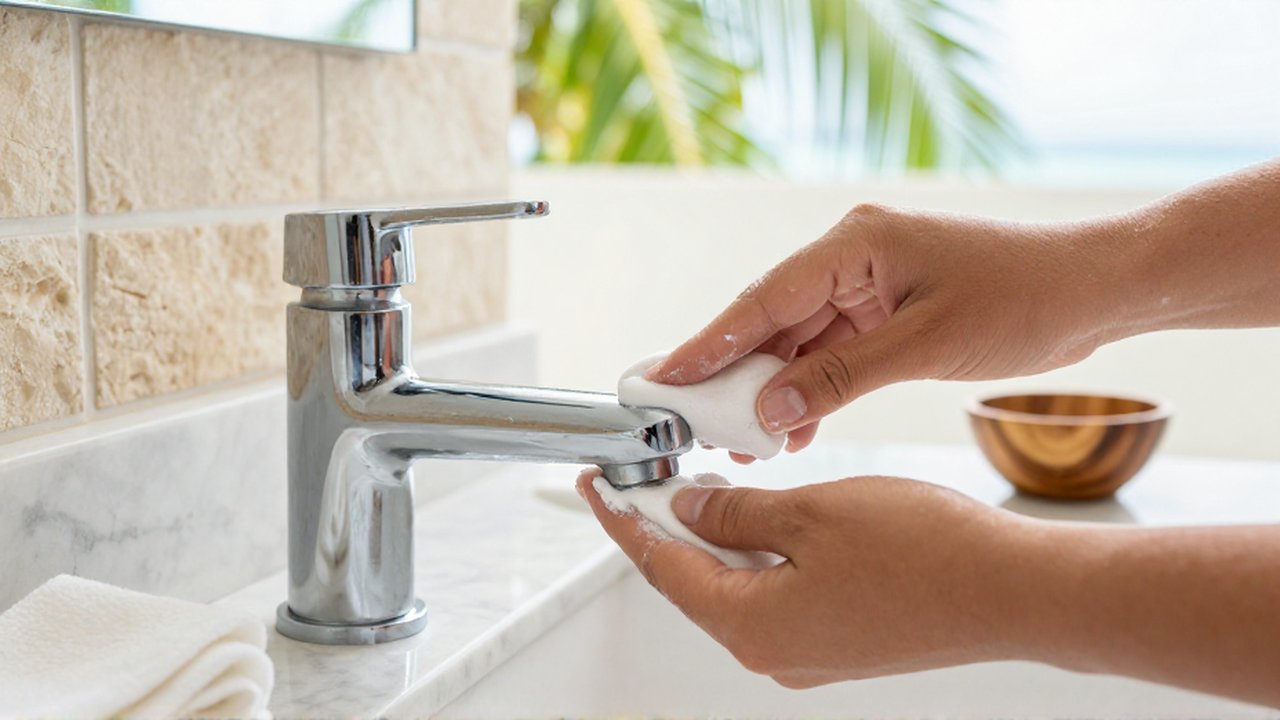
You do not need harsh industrial acids to tackle hard water stains. In fact, many commercial descalers can strip the protective coating off your faucets, leading to tarnishing or corrosion. For the safest and most effective results, natural acidic agents are the preferred choice.
White Vinegar is the most effective tool for this task. Its acetic acid content works by chemically breaking down the calcium carbonate bonds of the lime scale. It is inexpensive, readily available in any Dominican supermarket, and safe for most metal finishes.
Lemon Juice serves as an excellent secondary option. Like vinegar, it contains citric acid, which is highly effective at dissolving minerals. Additionally, the natural oils in the lemon rind can help polish the metal surface, leaving a pleasant scent in your kitchen.
Step by step guide to cleaning kitchen faucets
To achieve professional results, follow a systematic approach that allows the cleaning agents enough "dwell time" to work effectively.
- Prepare the solution: Fill a small plastic bag with white vinegar. If you prefer using lemon, squeeze the juice into a small bowl.
- Apply the agent: Submerge the faucet head into the vinegar-filled bag. Use a rubber band or a piece of string to secure the bag tightly around the spout. This ensures the acidic liquid stays in constant contact with the lime scale.
- Wait for the reaction: Leave the solution in place for at least 30 to 60 minutes. For very heavy, thick crusts, you may need to leave it for several hours or even overnight.
- Scrub gently: Remove the bag and use an old toothbrush or a soft nylon brush to scrub the areas where the buildup was most prominent. Avoid using steel wool or abrasive scouring pads, as these will scratch the finish.
- Rinse and dry: Rinse the faucet thoroughly with fresh water to stop the acidic action. Finally, dry the metal with a soft microfiber cloth. Drying is a crucial step to prevent new water spots from forming immediately.
Common mistakes to avoid during cleaning

While cleaning seems straightforward, certain errors can lead to permanent damage to your kitchen hardware.
- Using abrasive tools: Never use metal sponges, sandpaper, or stiff wire brushes. These tools work by scratching the surface, which destroys the reflective finish of the faucet.
- Overusing harsh chemicals: Avoid using bleach or high-strength acidic cleaners not specifically designed for metal finishes. These can cause pitting or discoloration in chrome-plated fixtures.
- Neglecting the aerator: Many people clean the exterior of the faucet but forget the aerator. If the water flow is still poor after cleaning, you may need to unscrew the aerator and soak it separately in a bowl of vinegar.
- Not drying the surface: If you leave the faucet to air dry, the mineral-heavy water will simply leave new spots, making the cleaning effort feel wasted.
Maintenance tips to prevent future buildup
Prevention is much easier than heavy-duty cleaning. Implementing a few simple habits can significantly extend the time between deep cleaning sessions.
| Method | Implementation | Frequency |
|---|---|---|
| Daily Wiping | Use a dry microfiber cloth to wipe the faucet after the last use of the day. | Daily |
| Rinsing | After heavy use, rinse the faucet with fresh water to remove mineral residue. | As needed |
| Aerator Check | Periodically unscrew and rinse the aerator to clear small particles. | Every 3 months |
Frequently asked questions
Can I use baking soda to remove lime scale? Baking soda is mildly abrasive and better suited for cleaning stains rather than dissolving hard mineral deposits. While it can help scrub away light buildup, vinegar is much more effective at the chemical breakdown of lime scale.
Is vinegar safe for all faucet finishes? While vinegar is safe for chrome, stainless steel, and brass, you should exercise caution with specialized finishes like matte black or oil-rubbed bronze. Always test a small, inconspicuous area first to ensure no discoloration occurs.
How do I know if my water is causing the buildup? If you notice white, chalky spots on your faucets, glassware, or around the edges of your sink, you are likely dealing with hard water characteristic of many local water sources.
What should I do if the lime scale is extremely thick? For heavy buildup that does not respond to a soak, you can create a paste of baking soda and a little water to gently scrub, or increase the duration of the vinegar soak to overnight.
Leave a Reply