
Solar panel maintenance guide for tropical climates
Introduction
Solar energy is one of the most effective ways to achieve energy independence and reduce electricity costs in tropical regions. However, the very environmental factors that make these areas ideal for solar production—high sunlight intensity and heat—also present unique challenges for equipment longevity. Maintaining your solar panels is essential to ensure they operate at peak efficiency and provide a high return on investment over their lifespan.
Proper maintenance involves more than just occasional cleaning; it requires a proactive approach to managing tropical environmental stressors. In climates characterized by high humidity, salt spray from coastal areas, and heavy seasonal rains, solar components are subject to specific types of degradation. By following a structured maintenance routine, homeowners can prevent performance drops and avoid costly repairs caused by neglect.
This guide provides practical strategies for maintaining solar photovoltaic systems in tropical environments. We will cover cleaning protocols, environmental considerations such as salt and dust management, and how to inspect your system to ensure it continues to harness the sun's power effectively.
Challenges of tropical solar environments
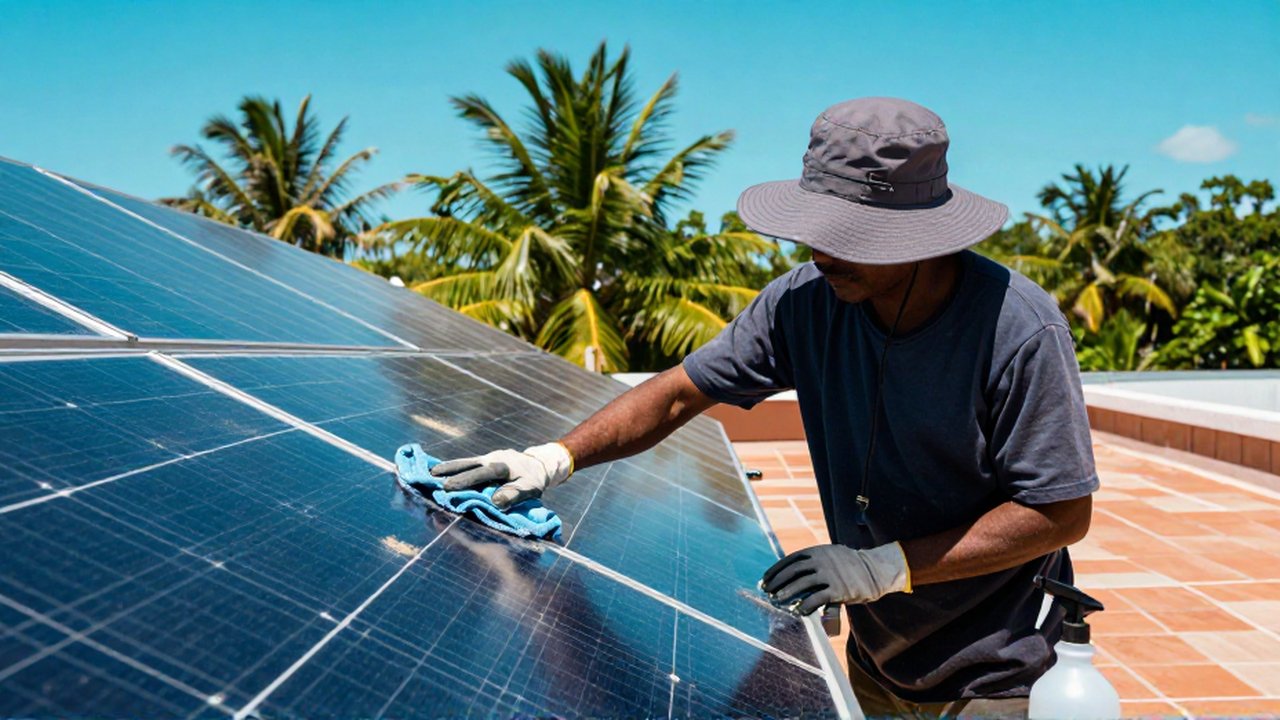
Tropical climates present a specific set of environmental hurdles that can diminish the performance of solar panels if not addressed. The most prominent issue is the accumulation of organic matter and minerals. High humidity levels can lead to the growth of algae, moss, or lichen on the edges of the panels, which creates shading and reduces energy absorption.
In coastal tropical regions, salt spray is a significant concern. Salt crystals can settle on the glass surface, creating a film that reflects sunlight away from the cells. If left uncleaned, salt can also contribute to the corrosion of mounting hardware and electrical connections. Additionally, while tropical areas benefit from heavy rainfall, these rains often carry dust, pollen, or volcanic ash depending on the specific geography, which can form a sticky layer on the panels when mixed with humidity.
Cleaning protocols for maximum efficiency
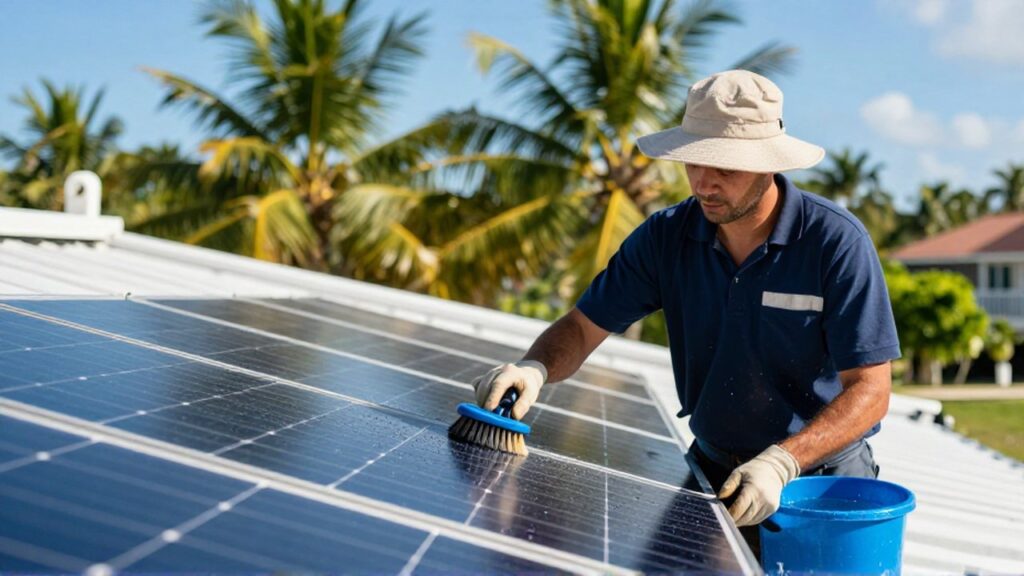
Keeping your solar panels clean is the most direct way to maintain high energy output. A layer of dirt, even if thin, can significantly impede the amount of light reaching the photovoltaic cells.
To clean your panels safely and effectively, follow these steps:
- Timing is critical: Always clean your panels early in the morning or late in the evening. Cleaning panels during the heat of the day can cause the glass to crack due to thermal shock when cold water is applied to a hot surface.
- Use the right tools: Use soft brushes or squeegees designed for solar panels. Avoid abrasive materials like steel wool or harsh scrubbers, as these can create micro-scratches on the glass, permanently reducing efficiency.
- Water and soap selection: Use plain water or a very mild, non-abrasive soap. Avoid detergents containing heavy chemicals, bleach, or salts, as these can leave residues that attract more dirt or damage the panel coatings.
- Minimize pressure: If using a hose, use a gentle stream. High-pressure washers can force water into the seals of the panel or the inverter housing, leading to electrical failures.
Regular inspection and monitoring
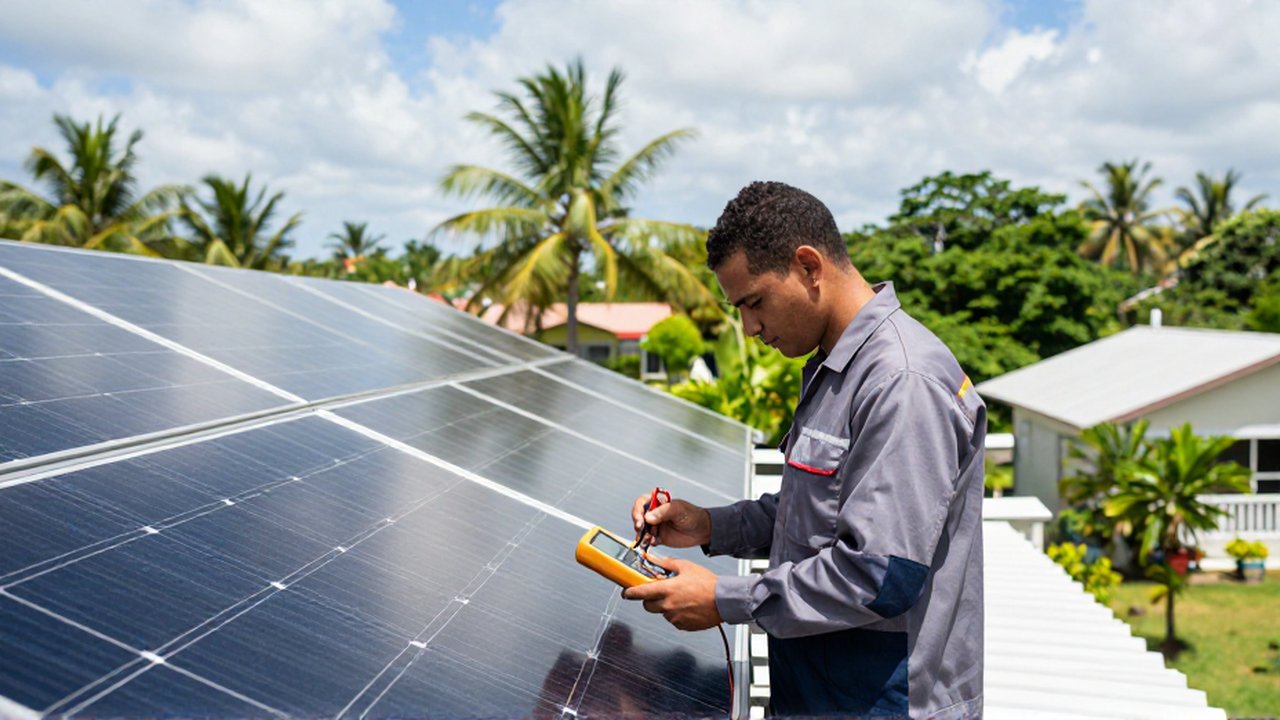
Maintenance is not limited to cleaning; it also involves consistent monitoring of the system's performance and physical condition. A well-maintained system should show consistent energy production patterns.
Homeowners should perform visual inspections at least once every few months. During these checks, look for visible cracks in the glass, discoloration of the panel surface, or signs of "hot spots" which might indicate a failing cell. Inspect the mounting structures to ensure they remain secure and show no signs of rust or loosening due to wind or heavy rain.
It is equally important to monitor your inverter. Most modern solar systems come with monitoring software or mobile apps. Regularly check these tools to ensure the system is producing the expected amount of power. A sudden, unexpected drop in production is often the first sign of a technical issue or a significant accumulation of debris that needs immediate attention.
Managing humidity and corrosion risks
In the tropics, moisture is a constant factor that affects both the panels and the electrical components. High humidity can lead to condensation inside electrical enclosures if they are not properly sealed.
To mitigate these risks, ensure that all junction boxes and inverters are installed in well-ventilated areas and remain tightly sealed against the elements. Periodically check the wiring for signs of wear or damage caused by insects or rodents, which are more common in warm, humid climates. In coastal areas, pay extra attention to the mounting rails and bolts; even if they are galvanized, the salt air can accelerate oxidation. Replacing old or rusted hardware promptly is much more cost-effective than replacing an entire mounting array.
Frequently asked questions
How often should I clean my solar panels in a tropical climate? This depends on your specific location. If you live near the coast or in a dusty area, you may need to clean them every month. In areas with frequent heavy rainfall and less dust, once every three to six months may suffice.
Can I use a pressure washer to clean my solar panels? It is not recommended. The high pressure can damage the seals around the panels and the electrical components, potentially leading to water ingress and system failure.
What should I do if I notice a sudden drop in energy production? First, perform a visual inspection to check for shade, heavy dirt, or visible damage. If the panels appear clean and intact, check your inverter for error codes and consult a professional technician to rule out electrical issues.
Does heavy rain clean my solar panels automatically? While rain can wash away some loose dust, tropical rain often carries particulates that can leave a film behind. Furthermore, light rain may not be sufficient to remove stubborn organic growth or salt deposits, so manual cleaning is still necessary.
Leave a Reply