
How to stop water from pooling near house foundations
Introduction
Water pooling near a house foundation is a serious structural concern that requires immediate attention to prevent long-term damage. When rainwater or runoff accumulates against the base of a building, it can seep into the soil, causing it to expand and exert immense pressure on the foundation walls. This process often leads to cracks, basement flooding, and compromised structural integrity. Understanding how to redirect this water is essential for protecting your home from moisture-related issues.
Managing ground moisture is a proactive way to ensure the longevity of your property. By implementing proper drainage strategies, you can prevent the buildup of hydrostatic pressure and reduce the risk of mold growth or foundation settling. Addressing these issues during the rainy season or after observing stagnant puddles can save significant costs in future repairs. This guide explores the most effective methods to direct water away from your home and keep your foundation dry.
Causes of water accumulation near foundations
The primary cause of water pooling is often improper grading, which refers to the slope of the ground surrounding your home. If the land around your foundation is flat or slopes toward the house rather than away from it, gravity will naturally pull water toward the structure. This creates a reservoir of moisture that stays in constant contact with your foundation walls.
Another common culprit is a malfunctioning gutter system. When gutters are clogged with debris or damaged, they fail to channel rainwater into the downspouts. Instead, water overflows directly from the roofline onto the ground adjacent to the house. Additionally, poor soil compaction or the presence of heavy clay soil can prevent water from absorbing into the ground, leading to surface pooling even if the slope seems adequate.
Solutions for improving ground grading
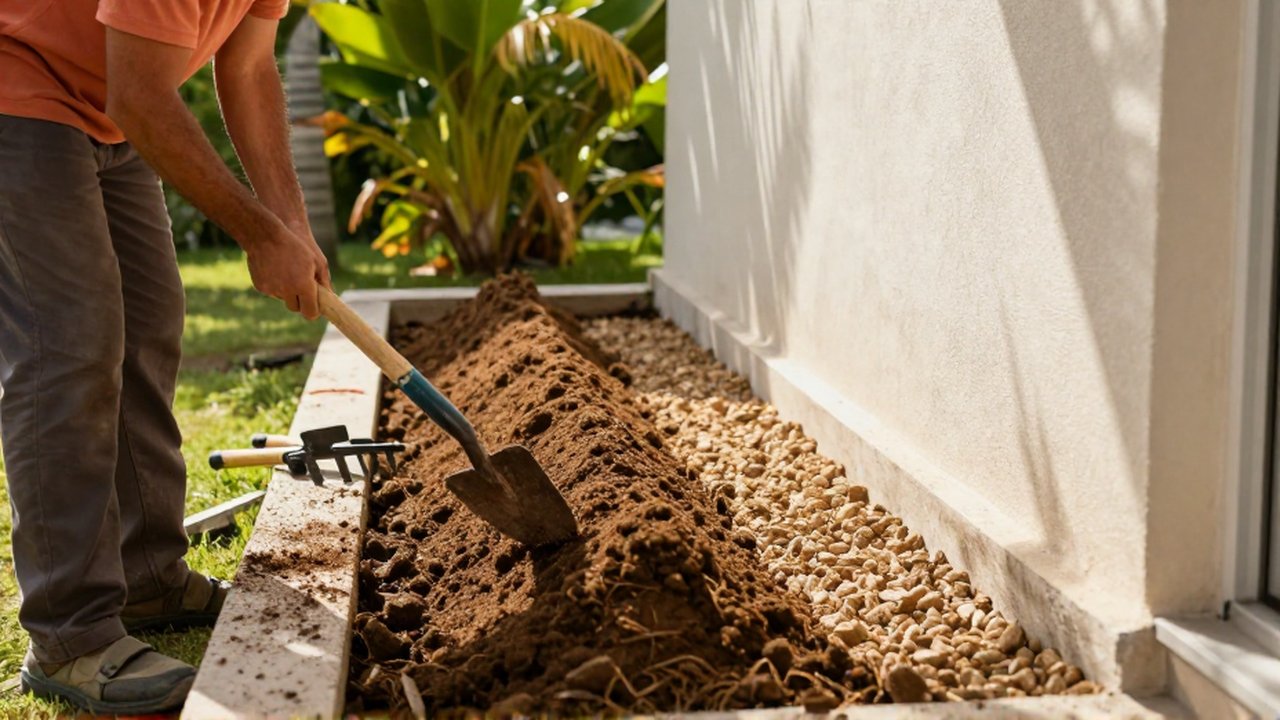
One of the most effective ways to prevent pooling is to ensure that the soil slopes away from the foundation. Ideally, the ground should drop at least six inches over the first ten feet surrounding the house. This creates a natural barrier that forces water to move toward the yard or a designated drainage area.
Correcting the grade may involve several steps:
- Adding soil: Fill low spots or depressions around the perimeter of the house with clean fill dirt.
- Compacting the soil: Once new soil is added, it must be compacted firmly to prevent it from washing away during the next heavy rain.
- Layering with mulch or gravel: To prevent erosion of your new grade, consider a layer of mulch or decorative stone, though ensure these do not hide structural cracks that need inspection.
Diverting water with downspout extensions
If your gutters are working correctly but water is still collecting near the walls, the issue likely lies in where your downspouts discharge. If a downspout ends right at the base of the house, it effectively acts as a hose directed at your foundation.
To fix this, you should install downspout extensions or splash blocks. These tools serve to carry the concentrated flow of water several feet away from the foundation. For a more permanent solution, consider underground downspout drains. These involve burying a PVC pipe that connects to your downspouts and carries the water to a lower part of the property or a dry well, completely removing the water from the vicinity of your home's base.
Implementing advanced drainage systems
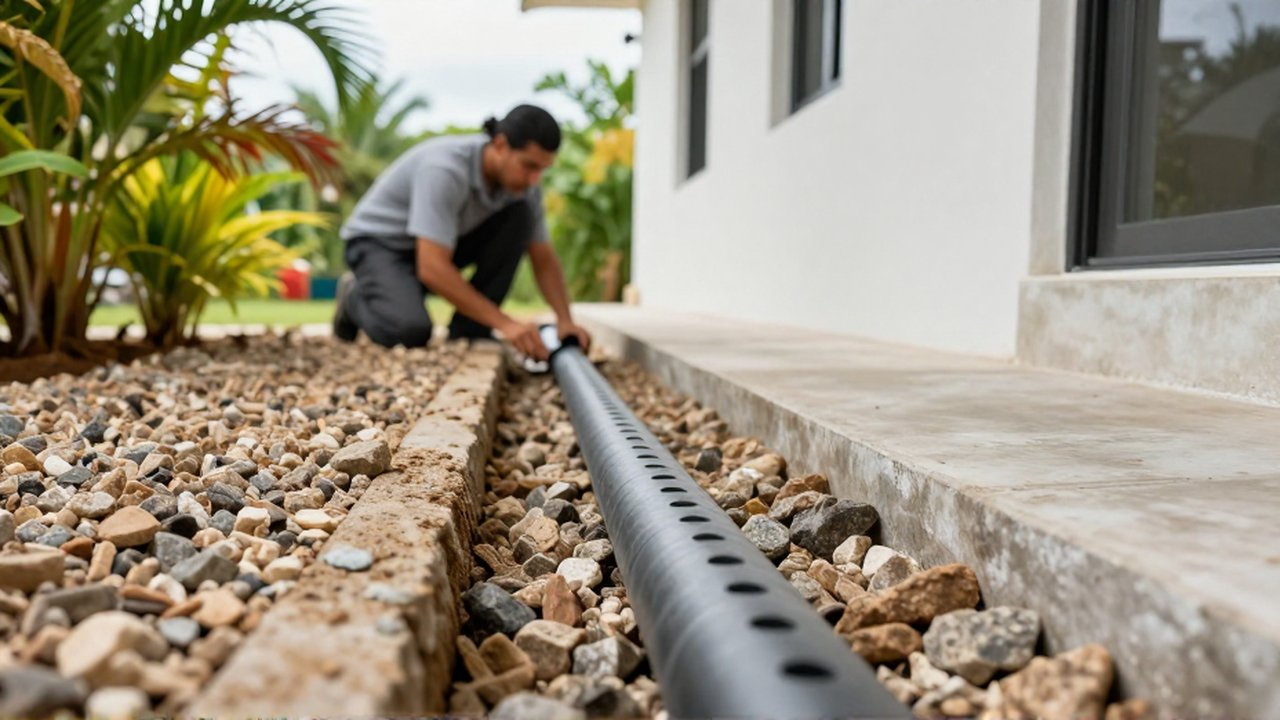
In areas with heavy rainfall or naturally poor soil drainage, simple grading and extensions might not be enough. In these cases, more robust drainage systems may be necessary to manage large volumes of water.
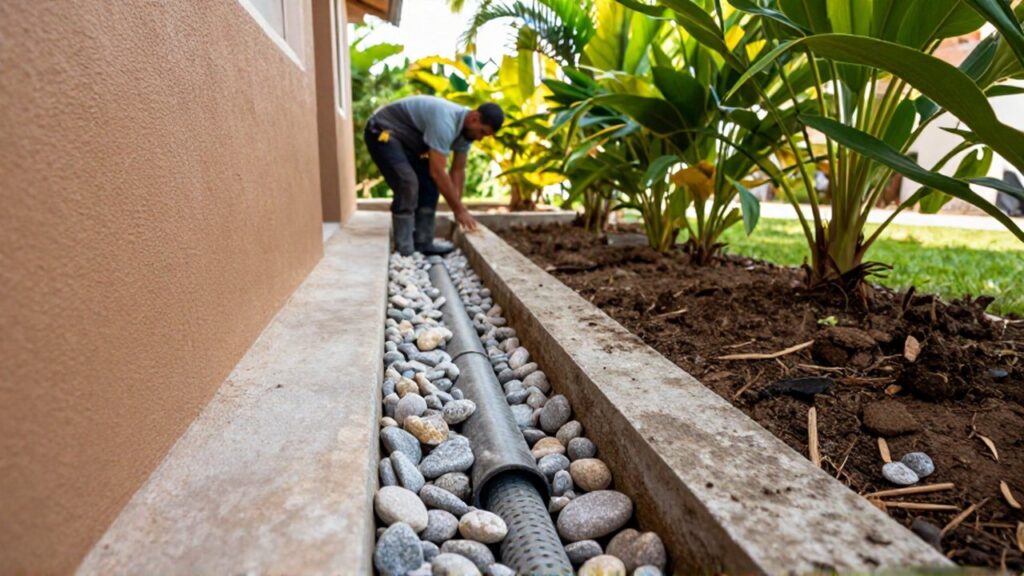
French Drains A French drain consists of a perforated pipe buried in a trench filled with gravel. The gravel allows water to enter the trench, where the pipe collects it and directs it to a safer location. This is particularly useful for managing groundwater that rises near the foundation.
Swales A swale is a shallow, landscaped depression designed to act as a natural channel. Instead of letting water pool, you create a gentle "valley" in the landscape that guides the runoff around the house and toward a street, garden, or drainage basin.
| System Type | Best Use Case | Primary Benefit |
|---|---|---|
| Grading | Minor slope issues | Low cost and easy to implement |
| Downspout Extensions | High-volume roof runoff | Immediate redirection of water |
| French Drains | High groundwater or soil saturation | Manages subterranean moisture |
| Swales | Large areas of surface runoff | Uses landscaping to manage flow |
Common mistakes to avoid
A frequent mistake homeowners make is using materials that can actually trap moisture. For example, placing heavy mulch directly against a wooden foundation or siding can hold dampness against the structure, promoting rot. Always maintain a small gap between your landscaping and the foundation walls.
Another mistake is ignoring the maintenance of existing systems. A perfectly graded yard will fail if the gutters are full of leaves, or a French drain will become useless if the gravel becomes clogged with silt and fine sediment. Regular inspections of your drainage pathways are necessary to ensure they remain functional throughout the year.
Frequently asked questions
How do I know if my foundation is being damaged by water? Look for signs such as cracks in interior or exterior walls, damp spots on basement walls, peeling paint, or doors and windows that suddenly become difficult to open or close.
Can plants help or hurt foundation drainage? While certain plants can help absorb moisture, large trees with aggressive root systems can sometimes interfere with underground drainage pipes or cause soil shifts. It is best to use moisture-absorbing plants in areas designed to catch runoff.
How often should I inspect my drainage systems? It is recommended to inspect your gutters, downspouts, and ground grading at least twice a year: once in the spring to prepare for the rainy season and once in the autumn to clear debris before winter.
Is a French drain better than a swale? It depends on the problem. A swale is excellent for managing surface water moving across the lawn, while a French drain is specifically designed to handle water that is saturating the soil or rising from underneath.
Leave a Reply