
Best methods for cleaning air conditioner filters

Introduction
Air conditioner filters play a critical role in maintaining both the air quality of your home and the efficiency of your cooling system. In tropical climates, where humidity and dust accumulation are constant challenges, these filters act as the first line of defense, trapping airborne particles, pollen, and debris before they enter your living spaces. When filters become clogged, the unit must work significantly harder to circulate air, leading to increased energy consumption and unnecessary mechanical strain.
Regularly cleaning your filters is a simple yet highly effective maintenance task that can extend the lifespan of your appliance. By removing the buildup of dust and organic matter, you ensure that airflow remains unobstructed, allowing the system to reach the desired temperature more quickly. This practice not only helps in reducing monthly electricity bills but also promotes a healthier indoor environment by preventing the circulation of allergens and mold spores.
Learning the correct methods for cleaning these components is essential to avoid damaging the delicate mesh or the frame of the filter. Depending on the type of filter your unit uses, the approach may vary from a simple vacuuming session to a thorough washing with mild detergents. Following a consistent cleaning schedule is the best way to guarantee peak performance throughout the hottest months of the year.
Benefits of clean air conditioner filters
Maintaining clean filters provides several immediate advantages for your household. The most noticeable benefit is improved air quality. A clean filter ensures that dust, pet dander, and common allergens are effectively captured and prevented from being redistributed throughout the rooms. This is particularly important for residents with respiratory sensitivities.
Another significant advantage is energy efficiency. When a filter is blocked, the air conditioner must consume more electricity to pull air through the restricted passages. By keeping the filters clear, you minimize this resistance, which helps lower energy costs and reduces the overall load on your electrical system. Furthermore, regular cleaning helps prevent mechanical failure. A system that does not struggle to breathe is less likely to overheat or suffer from frozen evaporator coils, which are common issues caused by restricted airflow.
Essential tools for filter maintenance
Before starting the cleaning process, it is important to gather the necessary supplies to ensure the job is done safely and effectively. While the requirements vary based on your specific AC model, the following items are generally useful:
- Vacuum cleaner with a brush attachment for removing loose dust.
- Soft-bristled brush for delicate cleaning of the mesh.
- Mild dish soap to break down greasy residues or stubborn grime.
- Warm water for rinsing.
- Microfiber cloth for drying the components.
- Protective mask and gloves to prevent inhaling disturbed dust during the process.
Step by step guide for washing reusable filters
Most residential window and split units use reusable mesh filters that can be washed. Follow these steps to ensure they are cleaned without causing damage:
- Power down the unit: Always turn off the air conditioner and unplug it or switch off the breaker to ensure safety during maintenance.
- Access the filters: Open the front panel of the indoor unit. Depending on the model, you may need to gently lift or slide the panel to reveal the filter slots.
- Remove the filters carefully: Slide the filters out of their tracks. Be cautious not to bend the plastic frames or tear the mesh.
- Dry vacuuming: Use a vacuum cleaner with a soft brush attachment to remove the thickest layer of dust from the surface of the filter. Always vacuum from the "clean" side (the side facing away from the dust) to avoid pushing particles deeper into the mesh.
- Wash with mild soap: If the filters are still dirty or feel greasy, submerge them in a basin of warm water mixed with a small amount of mild dish soap. Use a soft brush to gently agitate the mesh if necessary. Avoid using harsh chemicals or abrasive scrubbers, as these can create holes in the filter.
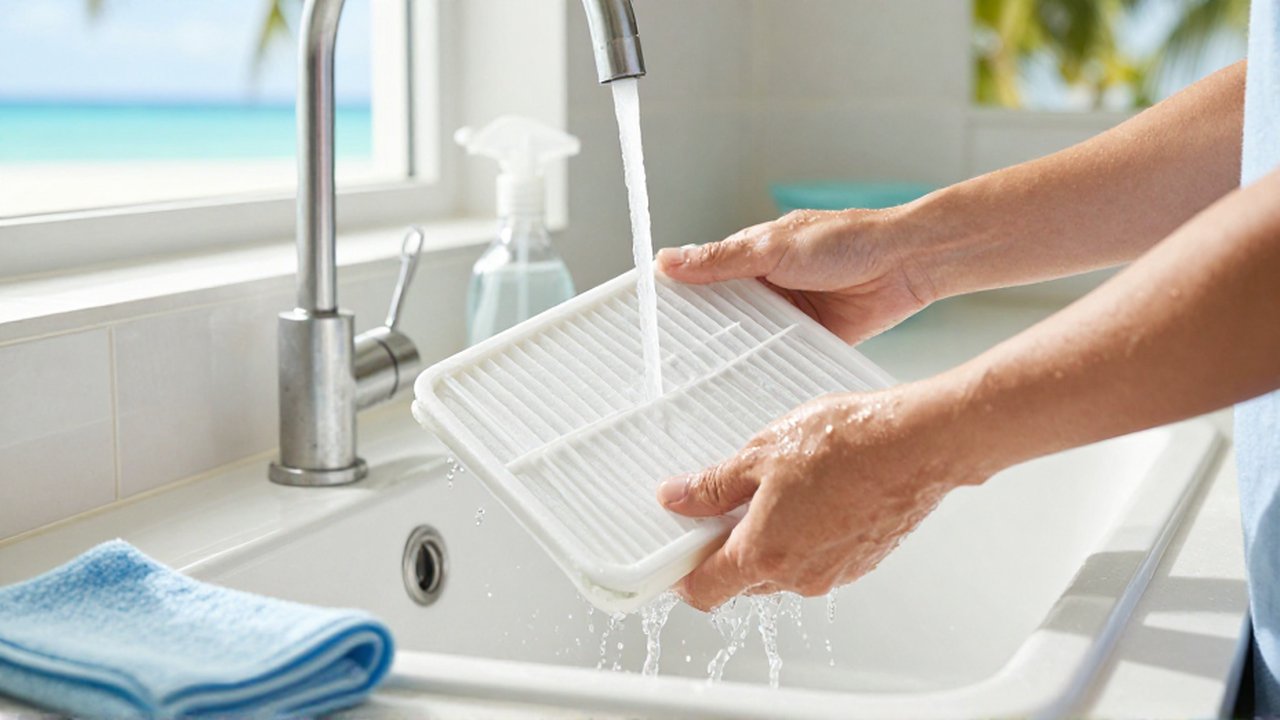
- Rinse thoroughly: Run lukewarm water through the filter to remove all traces of soap and loosened debris.
- Air dry completely: Place the filters in a shaded area to dry. Never reinstall a wet filter, as moisture trapped in the unit can lead to mold growth and unpleasant odors.
Methods for cleaning disposable filters
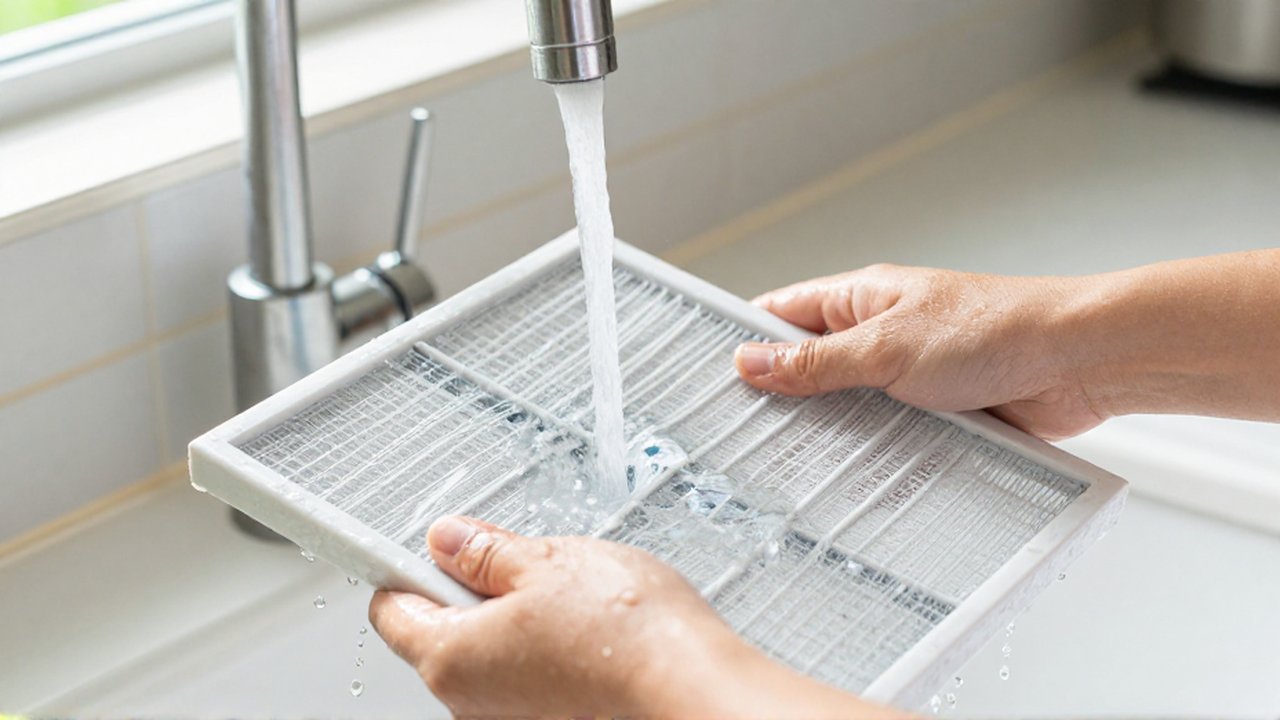
It is important to distinguish between reusable mesh filters and disposable pleated filters. Many central air conditioning systems use pleated filters made of paper or fiber that are designed to be replaced rather than washed.
Attempting to wash a disposable pleated filter will likely destroy its structure and render it useless. If you find that your system uses these types of filters, the only recommended method is replacement. When a disposable filter appears gray, dark, or shows visible buildup, it is time to install a new one. Check your user manual to ensure you purchase the correct dimensions and filtration rating for your specific machine.
Common mistakes to avoid during cleaning
To maintain the integrity of your air conditioner, avoid these frequent errors:
- Using hot water: Extremely hot water can warp the plastic frames of the filters, making them impossible to reinsert into the unit.
- Applying high pressure: Never use a high-pressure hose to clean filters, as the force can tear the delicate mesh.
- Forgetting to dry them fully: Reinstalling damp filters is a primary cause of mildew and musty smells in the indoor unit.
- Overusing chemicals: Bleach or strong detergents can degrade the filter material and may leave behind residues that affect the air quality you are trying to improve.
Frequently asked questions
How often should I clean my filters? In high-dust environments or homes with pets, it is ideal to check and clean your filters every two to four weeks during heavy usage. In cleaner environments, once a month is generally sufficient.
Can I use a pressure washer on my filters? No. The high pressure from a pressure washer can easily damage the mesh or the frame, making the filter ineffective or causing it to get stuck in the unit.
What is the sign that my filter needs immediate attention? If you notice a decrease in cooling performance, unusual noises coming from the unit, or a musty odor when the air turns on, your filters likely require immediate cleaning or replacement.
Do all air conditioners use the same type of filter? No. While many residential split units use reusable plastic mesh filters, many central air systems use disposable paper or fiberglass pleated filters that cannot be washed. Always check your manual.
Leave a Reply