
Best fertilizers for growing fruit trees in humidity

Introduction
Growing fruit trees in high-humidity environments, such as the tropical climate of the Dominican Republic, requires a specific approach to nutrition. High humidity often coincides with heavy rainfall, which can rapidly leach essential nutrients from the soil, leaving your trees hungry and prone to disease. Selecting the right fertilizer is essential to ensure that trees have the strength to produce abundant fruit while maintaining a robust root system and healthy foliage.
Understanding the balance between nutrient delivery and environmental conditions is the key to long-term success. When humidity is high, the risk of fungal issues increases, and the soil's ability to retain minerals changes. By choosing fertilizers that promote slow release or organic decomposition, gardeners can provide a steady stream of nutrients that helps trees thrive despite the challenging moisture levels.
Challenges of fertilizing in humid climates
In humid regions, the primary challenge is nutrient leaching. When frequent rains occur, water moves through the soil profile, carrying away soluble nitrogen and other minerals before the tree's roots can absorb them. This can lead to yellowing leaves and poor fruit development. Furthermore, excessive moisture can make the soil more acidic over time, which affects how easily a tree can take up nutrients like phosphorus and magnesium.
Another significant concern is the increased prevalence of pests and fungal diseases. While a well-fed tree is generally more resilient, over-applying nitrogen can lead to excessive, soft leafy growth. This lush, succulent foliage is particularly attractive to insects and more susceptible to mold and mildew in humid air. Therefore, the goal is not just to feed the tree, but to feed it in a way that promotes structural integrity and balanced growth.
Types of fertilizers for tropical fruit trees
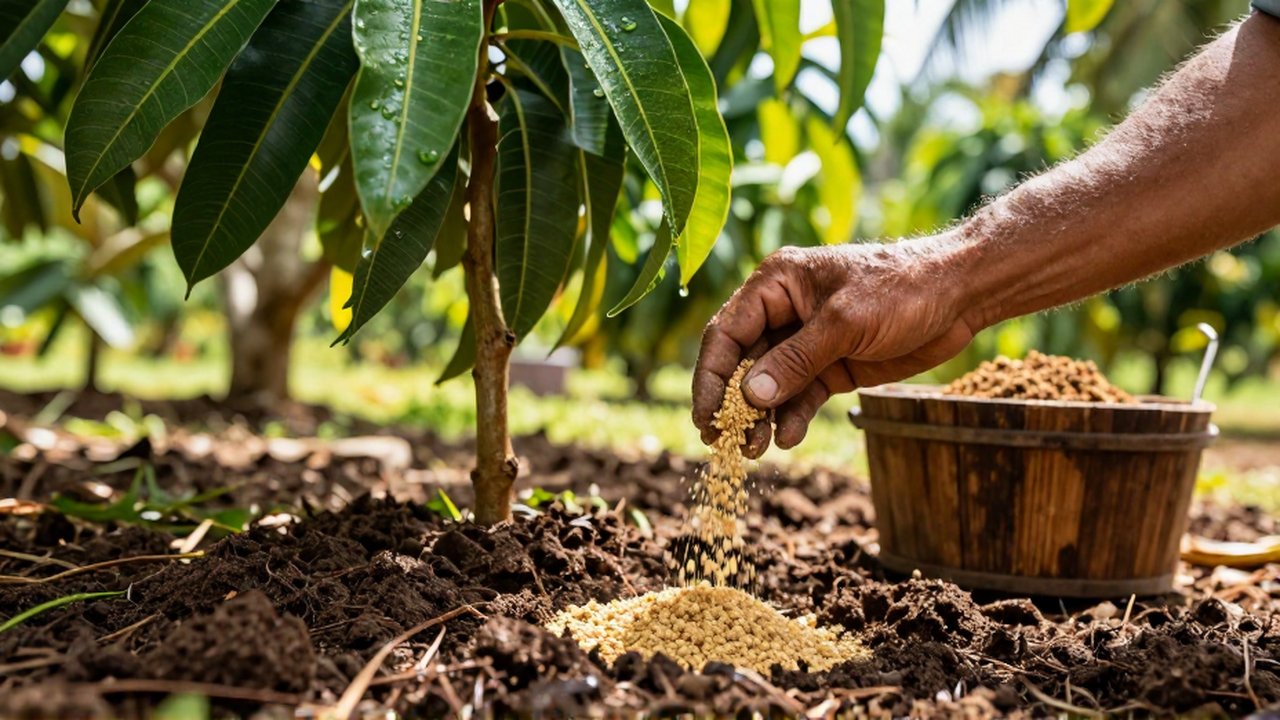
Selecting the right type of fertilizer depends on whether you prefer organic or synthetic options. Each has distinct advantages when dealing with high moisture levels.
Organic Fertilizers Organic options, such as compost, manure, and bone meal, are often the best choice for humid environments. Because they must be broken down by soil microorganisms, they release nutrients slowly. This "slow-release" mechanism is ideal because it minimizes the risk of nutrients being washed away in a single heavy downpour. Additionally, organic matter improves soil structure, which aids in better drainage and aeration.
Synthetic Fertilizers Synthetic fertilizers provide precise, immediate concentrations of N-P-K (Nitrogen, Phosphorus, and Potassium). While they are effective for quick corrections, they are highly soluble. In a humid, rainy climate, they must be used with caution. Slow-release synthetic granules are a better alternative to liquid sprays, as they provide a more consistent nutritional supply without the immediate risk of leaching.
| Fertilizer Type | Release Speed | Leaching Risk | Best Use Case |
|---|---|---|---|
| Compost/Manure | Very Slow | Low | Soil conditioning and long-term health |
| Bone Meal | Slow | Low | Promoting root and flower development |
| Granular Synthetic | Medium | Moderate | Targeted nutrient boosts |
| Liquid Fertilizer | Fast | High | Immediate deficiency correction |
Key nutrients for fruit production
To ensure a successful harvest, you must focus on the specific needs of the fruit-bearing cycle.
Nitrogen (N) Nitrogen is responsible for vegetative growth and green, healthy leaves. While essential, it should be applied moderately. Too much nitrogen in a humid climate will result in "all leaves and no fruit," and may make the tree more vulnerable to rot.
Phosphorus (P) Phosphorus is vital for root development and the transition from vegetative growth to flowering. In many tropical soils, phosphorus can become "locked" due to soil acidity; therefore, ensuring adequate phosphorus is critical for a tree's ability to set fruit.
Potassium (K) Potassium is often called the "quality" nutrient. It regulates water movement within the tree (which is crucial in high humidity) and improves the sweetness, size, and shelf life of the fruit. It also strengthens the tree's overall resistance to environmental stress.
Micronutrients Magnesium and calcium are particularly important in humid environments. Calcium helps build strong cell walls, which can help the tree resist certain pathogens, while magnesium is essential for photosynthesis.
Application strategies and best practices

To maximize the effectiveness of your fertilizer and reduce waste, follow these strategic steps:
Timing the application Avoid applying fertilizer immediately before a predicted heavy rainstorm. Instead, apply nutrients when the soil is moist but not saturated. The best times are typically at the beginning of the growing season and again after the main flowering period has passed.
Placement techniques Do not apply fertilizer directly against the trunk of the tree, as this can cause "fertilizer burn" or promote rot in the bark. Instead, spread the fertilizer at the "drip line"—the area directly under the outer circumference of the tree's canopy. This is where the most active feeder roots are located.
Mulching for nutrient retention Applying a layer of organic mulch around the base of the tree (keeping it away from the trunk) is highly beneficial in humid climates. Mulch helps regulate soil temperature, retains moisture without waterlogging, and provides a slow source of organic nutrients as it decomposes.
Common mistakes to avoid
One frequent error is over-fertilizing in an attempt to compensate for perceived slow growth. In humid areas, this often leads to a cycle of rapid growth followed by pest outbreaks or fungal infections. Always stick to the recommended dosages.
Another mistake is neglecting soil pH. Because high humidity and heavy rain can acidify the soil, nutrients may become unavailable to the tree regardless of how much fertilizer you apply. Periodically testing the soil ensures that your fertilization efforts are actually reaching the plant.
Frequently asked questions
How often should I fertilize my fruit trees? This depends on the species and the season, but generally, a combination of slow-release organic matter once or twice a year and targeted supplemental feeding during flowering and fruiting stages is most effective.
Can I use liquid fertilizer in a rainy climate? You can, but it is less efficient. Liquid fertilizers wash away very quickly during rain. They are best used for small-scale, immediate corrections when you notice specific signs of nutrient deficiency.
How do I know if my tree has a nutrient deficiency? Observe the leaves. Yellowing leaves can indicate nitrogen deficiency, while purplish tints might suggest phosphorus issues. However, in humid climates, ensure the discoloration is not actually a fungal infection before applying more nutrients.
Does heavy rain make fertilizer unnecessary? No, but it makes it harder to keep in the soil. Heavy rain actually increases the need for balanced nutrition because it removes the very minerals the tree needs to build strength against the damp environment.
Leave a Reply