
How often should you fertilize tropical garden plants
Introduction
Fertilizing tropical garden plants is a vital practice for maintaining the lush, vibrant greenery characteristic of warm climates. Because tropical plants often grow rapidly and are subjected to intense sun and heavy rainfall, they consume soil nutrients at a higher rate than temperate species. Proper fertilization ensures that these plants have the necessary nitrogen, phosphorus, and potassium to support leaf development, flowering, and overall structural health.
Understanding the correct frequency of application is the key to preventing nutrient deficiencies and avoiding the risk of chemical burns. Applying fertilizer too often can lead to salt buildup in the soil, which stresses the root system, while applying it too rarely can result in stunted growth or yellowing leaves. By timing your feedings with the plant's natural growth cycles, you can create a sustainable and thriving tropical landscape.
Factors influencing fertilization frequency

The rhythm of fertilization in a tropical garden is not a one-size-fits-all calculation. Several environmental and biological factors dictate how often you should intervene. The most significant factor is the growth season. In tropical regions, many plants experience a period of vigorous growth during the rainy season and a period of relative dormancy or slower metabolic activity during the drier months.
The type of soil in your garden also plays a crucial role. Sandy soils, common in many coastal tropical areas, drain very quickly and leach nutrients away almost immediately after application. In these cases, more frequent, lighter applications of fertilizer are often better than a single heavy dose. Conversely, heavier clay soils hold nutrients longer but can suffer from poor aeration, which affects how plants absorb food.
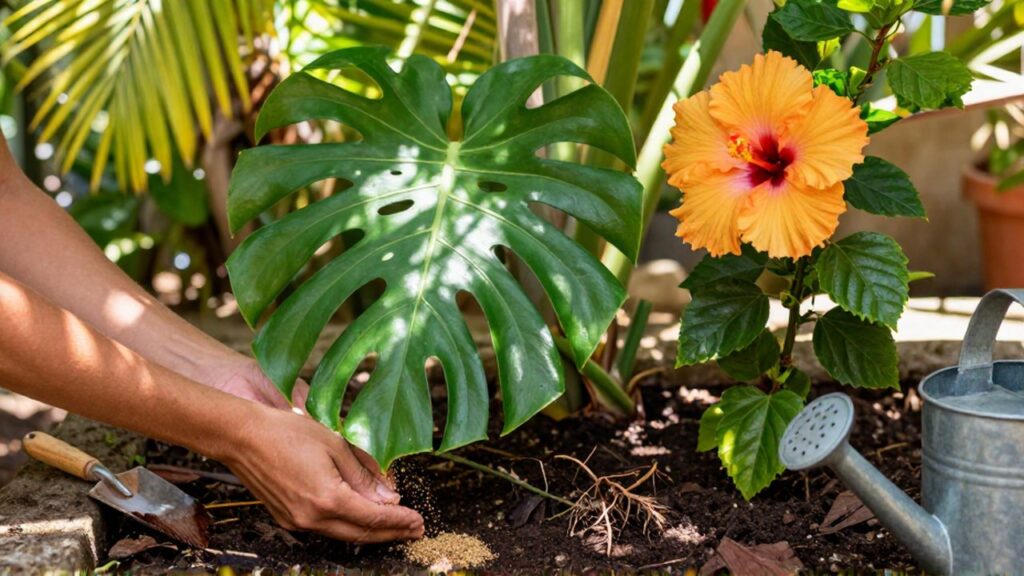
The specific needs of the plant species are equally important. For example, leafy tropical plants like ferns or monsteras require higher nitrogen levels to maintain their foliage, while flowering tropicals like hibiscus or bougainvillea need more frequent phosphorus to stimulate blooms. Always consider the age and maturity of the plant; young, establishing plants generally require more frequent assistance than established, hardy specimens.
Best practices for different fertilizer types
Choosing the right delivery method determines how often you will need to visit your garden with a fertilizer bag. Different products interact with the tropical ecosystem in distinct ways.
| Fertilizer Type | Application Frequency | Typical Characteristic |
|---|---|---|
| Slow-Release Granules | Every 3 to 6 months | Breaks down gradually with water; safest for beginners. |
| Liquid Fertilizers | Every 1 to 4 weeks | Provides an immediate nutrient boost; washes away easily. |
| Organic Compost/Manure | Once or twice a year | Improves soil structure and provides long-term nutrition. |
Slow-release fertilizers are often the most practical choice for tropical gardeners. They are designed to release nutrients steadily over several months, reducing the risk of over-fertilization. This is particularly useful during the rainy season when heavy downpours can easily wash liquid nutrients out of the root zone.
Liquid fertilizers offer a "quick fix." They are excellent for plants showing immediate signs of stress or deficiency, but because they are highly soluble, they require much more frequent applications. If you rely solely on liquid fertilizers, you must be vigilant about the schedule to avoid gaps in nutrition.
Organic amendments like compost or well-rotted manure serve a dual purpose. While they do provide nutrients, their primary benefit is improving the soil quality itself. These are best applied as a seasonal ritual rather than a frequent task, serving as a foundational layer of nutrition that supports the entire garden ecosystem.
Signs of over and under fertilization

Observing your plants is the most reliable way to determine if your fertilization frequency is correct. Plants communicate their nutritional status through their leaves and growth patterns.
Signs of under-fertilization include:
- Pale or yellow leaves: Often a sign of nitrogen deficiency (chlorosis).
- Stunted growth: The plant stops producing new leaves or shoots.
- Small or infrequent flowers: The plant lacks the energy to reproduce.
- Weak stems: Leaves may look healthy in color but the overall structure feels flimsy.
Signs of over-fertilization are often more dangerous and can kill a plant quickly:
- Leaf burn: The edges or tips of the leaves turn brown and crispy.
- Salt buildup: A white, crusty layer appearing on the soil surface.
- Unexpected lushness with no flowers: Excessive nitrogen can cause a plant to produce massive green leaves but fail to produce any blooms.
- Wilting in moist soil: High salt concentrations in the soil can prevent roots from absorbing water, leading to "physiological drought."
Common mistakes to avoid
One of the most frequent mistakes is fertilizing during periods of extreme heat or drought. If a plant is already stressed by lack of water, adding fertilizer can increase the osmotic pressure in the soil, making it even harder for the plant to drink, which leads to root burn. Always ensure the soil is adequately moist before applying any fertilizer.
Another mistake is ignoring the rainfall pattern. In tropical climates, a heavy storm can strip away all the nutrients you just applied. If you apply fertilizer right before a predicted period of heavy rain, you are essentially washing your money away into the groundwater. Try to time your applications during periods of predictable, moderate watering.
Finally, avoid the "more is better" mentality. It is much easier to correct a deficiency by adding more fertilizer later than it is to save a plant that has been chemically burned by an overdose. When in doubt, err on the side of caution by using a half-strength dose.
Frequently asked questions
Can I fertilize my plants during the rainy season? Yes, but be cautious. While the rain helps distribute nutrients, excessive rain can wash away soluble fertilizers before the plants can use them. Slow-release granules are typically better during this period.
How do I know if my soil already has enough nutrients? While professional soil tests are the most accurate method, you can observe your plants. If they are growing vigorously and blooming regularly without supplemental feeding, your soil is likely nutrient-rich.
Should I fertilize every time it rains? No. Frequent rain can lead to nutrient leaching, but fertilizing with every rain is unnecessary and can lead to chemical buildup. Stick to a schedule based on the type of fertilizer you are using.
Is organic fertilizer better than synthetic for tropical plants? Both have benefits. Organic fertilizers improve soil health and structure over time, which is excellent for long-term garden sustainability. Synthetic fertilizers provide precise, immediate nutrients for specific growth stages. Many gardeners use a combination of both.
Leave a Reply