
How to start a tropical vegetable garden in DR
Introduction
Starting a tropical vegetable garden in the Dominican Republic is a rewarding way to ensure a steady supply of fresh, nutrient-dense produce while reducing your monthly grocery expenses. Given the country's year-round warmth and intense sunlight, gardening offers a unique opportunity to grow a wide variety of crops that thrive in high humidity and high temperatures. This practice not only promotes food security but also creates a beautiful, living space within your home or backyard.
Setting up a garden in a tropical climate requires a specific approach to manage the intense sun and heavy seasonal rains. Unlike temperate climates where gardening is often seasonal, the Dominican Republic allows for staggered planting throughout the year. By understanding your local soil, water needs, and the specific varieties that love the Caribbean heat, you can transform a small corner of your property into a highly productive edible landscape.
Assessing your growing environment

Before purchasing seeds or digging into the earth, you must evaluate the specific microclimate of your property. In the Dominican Republic, the level of solar exposure and wind can vary significantly depending on whether you live in a coastal area, a mountainous region like Jarabacoa, or a more urban setting like Santo Domingo.
The first priority is sunlight. Most vegetables require at least six to eight hours of direct sun to thrive. However, in the midday heat of the Caribbean, some delicate greens might suffer from sunburn. Identifying areas that receive morning sun but offer some afternoon shade can be a strategic move for certain crops.
Secondly, consider your water access and drainage. Tropical soils can often become heavy and waterlogged during the rainy season, which leads to root rot. If your land is flat, you may need to implement raised beds to ensure excess water drains away from the plant roots. Conversely, if you are in a drier area, you must ensure your garden is located near a reliable water source to combat evaporation.
Choosing the right crops for the Caribbean
Not all vegetables are created equal when it comes to tropical heat. Selecting crops that are naturally adapted to high humidity and warm soil will significantly increase your success rate. A successful garden usually features a mix of high-yield staples and quick-growing greens.
The following table provides examples of vegetables that generally perform well in the Dominican climate:
| Crop Category | Examples | Growing Notes |
|---|---|---|
| Fruit-Bearing | Tomatoes, Peppers, Eggplant | Require consistent moisture and support structures. |
| Leafy Greens | Lettuce, Spinach, Kale | Best grown in partial shade or during cooler months. |
| Root Vegetables | Carrots, Radishes, Sweet Potatoes | Require loose, well-draining soil. |
| Legumes | Beans, Peas | Excellent for nitrogen fixation in the soil. |
While tomatoes and peppers are staples, they can be susceptible to fungal diseases due to high humidity. It is often wise to start with hardy options like sweet potatoes or various types of peppers, which tend to be more resilient to the local weather patterns.
Preparing the soil and planting methods

Soil quality is the foundation of a productive garden. Many tropical soils can be quite acidic or overly sandy. To create a fertile environment, you should incorporate organic matter such as compost or well-rotted manure. This improves soil structure, helps retain moisture during dry spells, and provides essential nutrients.
When it comes to planting, you have several options depending on your available space:
- In-ground gardening: Best for larger spaces and heavy feeders like corn or sweet potatoes, but requires careful weed management and soil preparation.
- Raised beds: Ideal for controlling soil quality and improving drainage. They are easier to manage and reduce the risk of soil compaction from walking.
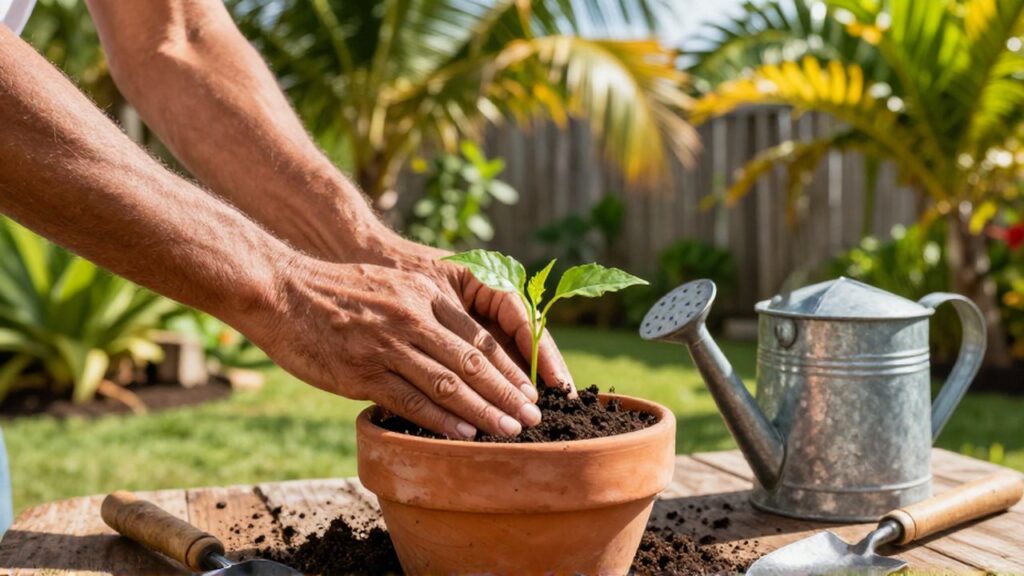
- Container gardening: A perfect solution for urban dwellers or those with limited space. Pots and containers allow you to move plants to follow the sun or provide shade.
Regardless of the method, avoid planting too closely together. Tropical plants can grow rapidly, and overcrowding limits airflow, which increases the risk of pests and diseases in humid conditions.
Managing maintenance and tropical challenges
Maintenance in a tropical garden is a continuous process of observation and adjustment. Because the growing season is essentially year-round, you must be vigilant about moisture levels and nutrient depletion.
Watering is perhaps the most critical task. During the dry season, early morning watering is best to minimize evaporation and ensure the water reaches the roots. During the rainy season, the focus shifts to monitoring for excess moisture and ensuring that your drainage systems (like trenches or raised beds) are functioning correctly.
Pest and disease management requires a proactive rather than reactive approach. The high humidity of the Dominican Republic can encourage fungal growth and attract various insects. Instead of relying heavily on chemicals, focus on: 1. Crop rotation: Never plant the same family of vegetables in the same spot two seasons in a row. 2. Companion planting: Growing certain plants together (like marigolds near tomatoes) can naturally deter some pests. 3. Regular inspection: Check the undersides of leaves frequently to catch infestations before they spread.
Frequently asked questions
Can I grow a vegetable garden in a very small backyard? Yes, container gardening is highly effective for small spaces. You can use vertical planters or hanging pots to maximize your growing area and focus on high-value crops like herbs, peppers, or salad greens.
How often should I fertilize my tropical garden? Because tropical plants grow quickly and heavy rains can leach nutrients from the soil, regular feeding is necessary. Incorporating organic compost every few months is a reliable way to maintain soil fertility without overwhelming the plants.
Is it better to plant during the rainy season or the dry season? Both seasons have advantages. The rainy season provides natural irrigation but carries a higher risk of fungus and soil erosion. The dry season allows for more control over water, but requires a much more disciplined irrigation schedule.
How do I prevent pests without using harsh chemicals? Maintaining healthy soil and ensuring good airflow between plants are the best defenses. Additionally, using natural deterrents like neem oil or introducing beneficial insects can help manage pest populations organically.
Leave a Reply