
How to prevent humidity damage in bedroom closets

Introduction
Humidity in bedroom closets is a common yet destructive issue, especially in tropical climates where moisture levels remain high year-round. When air becomes trapped in a confined space like a closet, it creates the perfect breeding ground for mold, mildew, and musty odors. This moisture can penetrate fabrics, causing permanent stains, unpleasant smells, and even damaging the structural integrity of wooden shelving and clothing.
Preventing this damage is essential for preserving your wardrobe and maintaining a healthy living environment. High humidity levels can lead to respiratory irritants and skin allergies if mold spores are allowed to proliferate near your sleeping area. By implementing proactive maintenance and organization strategies, you can protect your investments and ensure your clothes stay fresh and wearable.
Learning how to manage moisture involves a combination of airflow optimization, environmental control, and regular inspections. This guide provides practical steps to identify early signs of moisture buildup and offers sustainable solutions to keep your closet dry and well-maintained.
Causes of moisture buildup in closets
Closets are often prone to humidity because they are enclosed, stagnant spaces. When a closet lacks proper ventilation, air cannot circulate, allowing moisture to settle on surfaces and fabrics. In many homes, closets are built against exterior walls, which can lead to temperature differentials. If the wall is cooler than the air inside the closet, condensation can form, providing the liquid water necessary for mold growth.
Other factors contributing to the problem include tight-fitting doors that block airflow, a lack of sunlight, and high ambient humidity in the bedroom itself. If you store clothes that are slightly damp—such as items taken directly from a laundry cycle that hasn't fully dried—you introduce a significant source of internal moisture that can quickly spread to surrounding garments.
Effective ways to improve airflow
The most effective way to prevent damage is to ensure that air is constantly moving through the space. If your closet has solid doors, consider leaving them cracked open for a few hours every day to allow the air to exchange with the rest of the room. This prevents the stagnation that leads to condensation.
Organization also plays a critical role in airflow. Overcrowding a closet is a primary cause of humidity issues. When clothes are packed too tightly together, air cannot pass between the garments, creating "dead zones" where moisture gets trapped. Following these tips can help:
- Space out hangers: Ensure there is at least a small gap between each item of clothing to allow air to circulate.
- Use breathable storage: Avoid using airtight plastic bins for long-term storage, as these can sometimes trap moisture inside if the items were not perfectly dry. Instead, use fabric storage containers.
- Clear the floor: Keeping the bottom of the closet clear allows air to move underneath shelving and hanging clothes.
Moisture control solutions and tools
When passive ventilation is not enough, you may need to use active moisture control methods. Depending on the severity of the humidity in your home, there are several layers of defense you can implement.
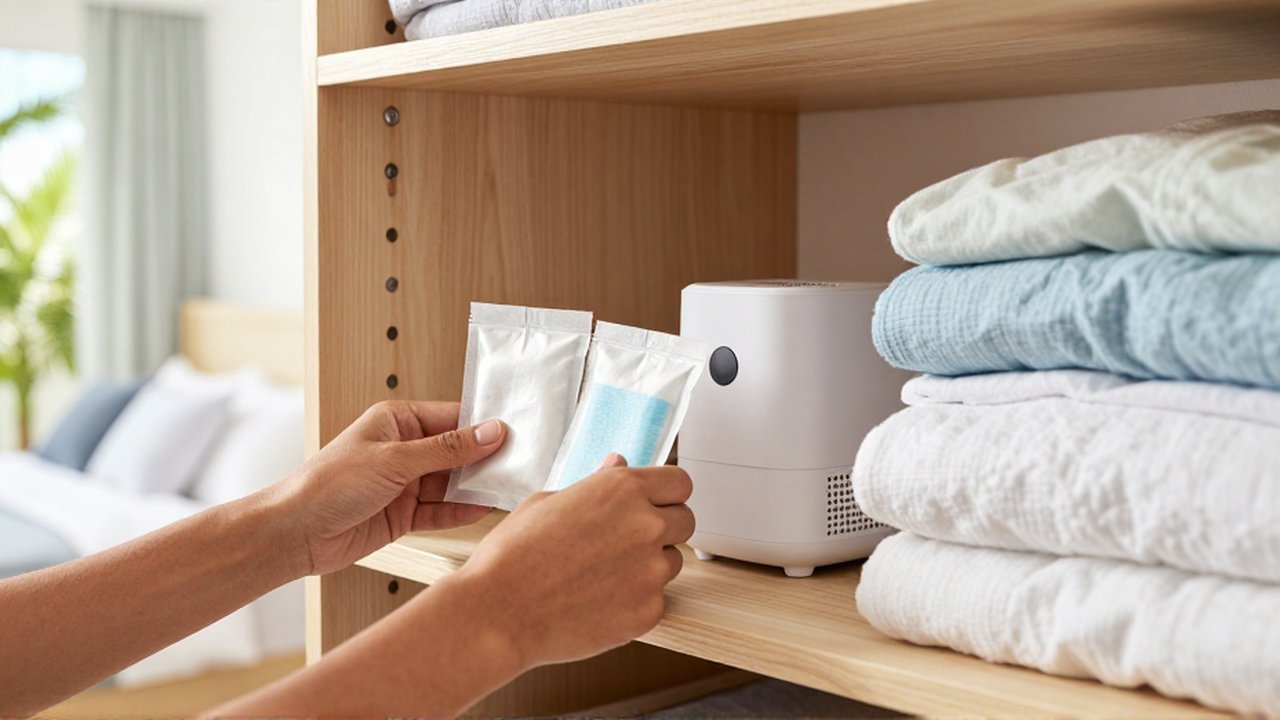
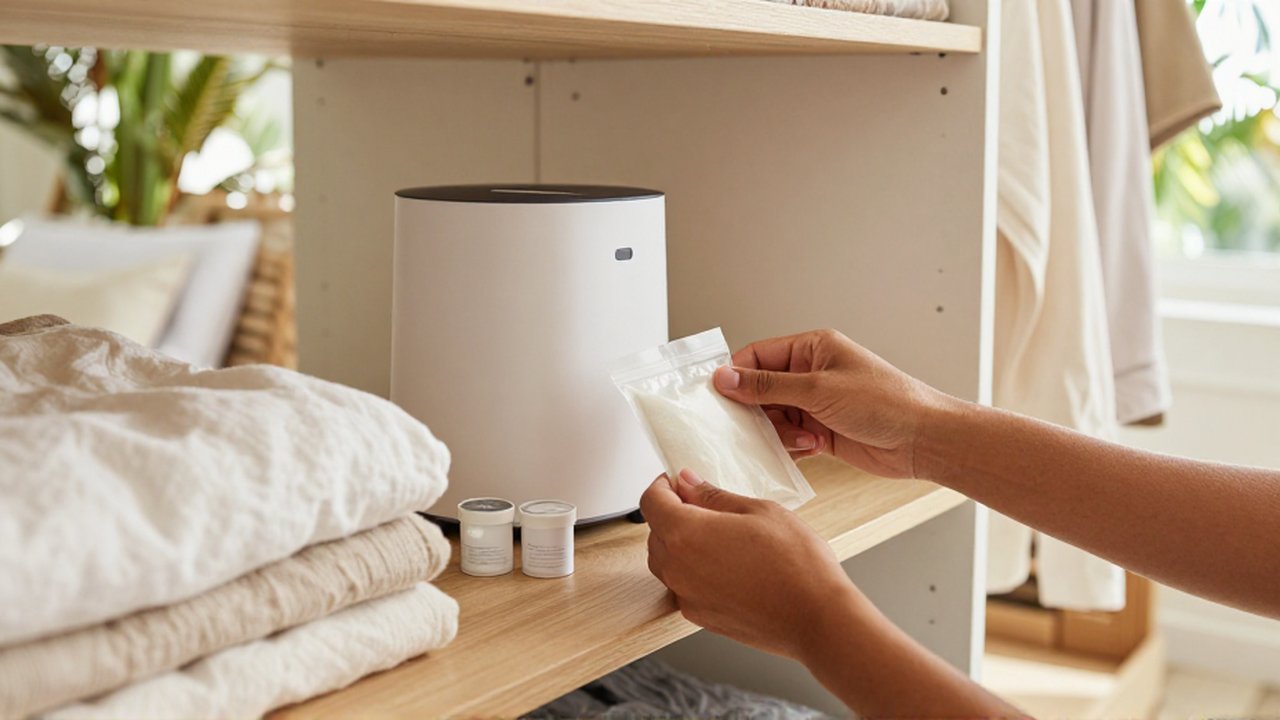
Desiccants and moisture absorbers Small, disposable moisture absorbers are highly effective for small, enclosed closets. These products use chemical agents to pull water from the air and trap it in a container. They are easy to place on shelves or in corners, though they need to be replaced once they become saturated.
Dehumidifiers For rooms or large walk-in closets that suffer from chronic dampness, a dedicated dehumidifier is the most powerful solution. A small, portable unit can significantly lower the ambient humidity level of the entire bedroom, which indirectly protects the closet.
Comparison of moisture management methods
| Method | Best Use Case | Pros | Cons |
|---|---|---|---|
| Desiccant Packs | Small, enclosed closets | Inexpensive and easy to use | Must be replaced frequently |
| Air Circulation | General prevention | Zero cost; improves air quality | Requires habit changes |
| Dehumidifiers | Large or damp rooms | Highly effective; controls entire room | Higher upfront cost; uses electricity |
Routine maintenance and prevention steps
Prevention is much easier than cleaning up mold after it has appeared. Establishing a routine will help you catch issues before they escalate into expensive repairs.
First, inspect your closet once a month for signs of dampness, such as a musty smell, spotting on clothes, or discoloration on the walls and shelving. During these inspections, check the corners and the back of the closet, as these are the areas most likely to collect moisture.
Second, always ensure that laundry is 100% dry before placing it in the closet. Even a tiny amount of residual moisture in a heavy sweater or denim pair can trigger mold growth in a confined space. Finally, if you live in a tropical area, consider using cedar wood accessories. While cedar is primarily used for pest control, it also possesses natural moisture-wicking properties that can help absorb minor amounts of humidity.
Common mistakes to avoid
One frequent mistake is ignoring the "musty" smell. By the time you can smell mold, the spores are already present. Many people wait until they see visible black spots to take action, but by then, the damage to clothing and wood may already be irreversible.
Another error is sealing clothes in plastic bags to "protect" them. If any moisture is trapped inside the bag, it will be forced to condense against the plastic, potentially ruining the garment. Similarly, do not push furniture or shelving units directly against exterior walls without leaving a small gap; this gap is necessary for air to flow and to prevent moisture from being trapped between the furniture and the wall.
Frequently asked questions
How can I tell if my closet has mold? Look for small black, green, or white spots on clothes, fabric linings, or wooden shelves. Additionally, a persistent musty or earthy odor is a strong indicator of microbial growth.
Will hanging clothes in the sun help? Yes, exposing clothes to direct sunlight can help kill surface bacteria and dry out any moisture, but ensure you do not leave delicate fabrics in direct sun for too long to avoid fading.
Can I use essential oils to stop humidity? Essential oils like tea tree or lavender may help mask odors or provide mild antifungal properties, but they are not a substitute for actual moisture control or dehumidification.
Is it okay to store seasonal clothes in plastic bins? It is better to use breathable fabric bins. If you must use plastic, ensure the items are completely dry and consider adding a desiccant packet inside each bin.
Leave a Reply