
Effective ways to dust high ceiling corners and molding
Introduction
Dust accumulation in high ceiling corners and crown molding is a common but often overlooked aspect of home maintenance. Over time, fine particles, cobwebs, and allergens settle in these elevated areas, where they remain undisturbed by daily cleaning routines. Neglecting these spaces can compromise indoor air quality and detract from the aesthetic cleanliness of a room, especially in homes with high-end architectural details.
Addressing these difficult-to-reach areas is essential for maintaining a healthy living environment. Because gravity causes dust to fall, cleaning these spots requires a strategic approach to prevent debris from landing on furniture, floors, or decor below. Learning the right techniques ensures that you can tackle these tasks efficiently without the need for constant readjustment or excessive physical strain.
Regularly cleaning high-reaching surfaces helps prevent the buildup of thick, heavy dust layers that are much harder to remove once they become caked. By implementing a seasonal or quarterly cleaning schedule, you can keep your ceilings looking pristine and ensure that your home remains a fresh, allergen-free space for your family.
Essential tools for high reach dusting

To clean effectively without constant ladder repositioning, you need tools designed for extension and dust capture. Using a standard handheld cloth is rarely sufficient and often leads to more mess than progress. Instead, consider the following specialized implements:
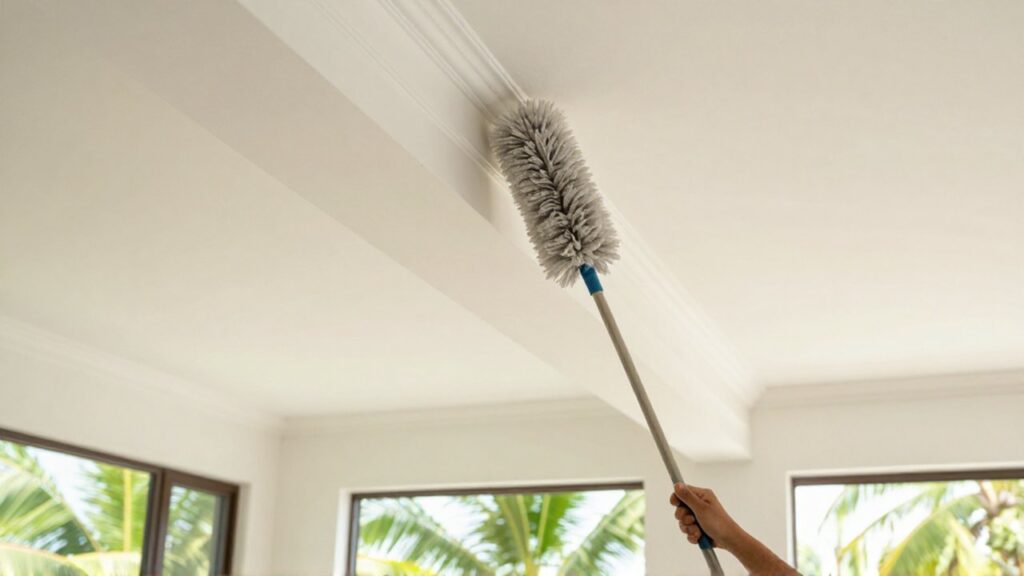
- Extendable microfibre duster: These are perhaps the most versatile tools. Many feature telescoping poles that can reach several meters, allowing you to stay safely on the floor or a low step stool.
- Microfibre cloths: These are superior to cotton cloths because the tiny fibers act like magnets, trapping dust rather than simply pushing it around the air.
- Vacuum with wand attachments: For heavy dust or cobweb thickets, a vacuum cleaner equipped with a long, slender hose attachment and a soft brush nozzle is highly effective.
- Step ladders or stable stools: While extendable tools are ideal, sometimes direct contact is necessary for intricate molding. Always ensure your ladder is on a flat, level surface.
Step by step approach for corners and molding
Cleaning high areas should always follow a "top-down" logic. This ensures that any dust dislodged during the process is captured by subsequent cleaning stages rather than falling onto already cleaned surfaces.
First, clear the area below the target zone. Move small items like picture frames or lamps away from the direct "fall zone" of the ceiling. If possible, lay a drop cloth or a bedsheet over large furniture to catch falling particles.
Second, tackle the corners using an extendable duster. Start by gently swirling the duster in the corner of the ceiling to collect cobwebs and loose dust. Move in slow, circular motions rather than rapid strokes, as fast movements tend to launch dust into the air.
Third, clean the crown molding. Follow the line of the molding with your duster, moving from one end of the room to the other. If the molding has deep grooves or intricate carvings, use a smaller, more flexible brush attachment to ensure dust is removed from the crevices.
Finally, once the high surfaces are clear, perform a quick sweep or vacuum of the floor area to collect any remnants that settled during the process.
Techniques to prevent dust redistribution

One of the biggest frustrations in high-ceiling cleaning is seeing dust fall onto the floor or furniture immediately after you finish. To minimize this, you should focus on "trapping" rather than "sweeping."
Using a damp microfiber cloth is one of the most effective ways to prevent redistribution. A slightly damp cloth holds onto the dust physically, preventing it from becoming airborne. However, be cautious not to use too much moisture, as this can damage certain types of wood molding or leave water spots on painted surfaces.
Another effective method is to work in sections. Instead of trying to clean an entire room in one go, focus on one corner at a time. This allows you to monitor the fall of dust and address it immediately before it spreads across the room. If you are using a vacuum, ensure the suction is set to a medium level so the brush attachment doesn't bounce off the molding, which can shake dust loose prematurely.
Common mistakes to avoid during high dusting
Avoid the impulse to use heavy-duty chemical sprays on high moldings. Sprays can cause liquid to run down the walls, leaving unsightly streaks or damaging the paint. If you must use a cleaner, apply it to the cloth first, never directly to the ceiling.
Another frequent error is overextending your reach. Attempting to reach a corner while standing on a chair or an unstable surface is a significant safety risk. If a tool cannot reach the area safely, it is better to move the ladder closer.
Lastly, do not use feather dusters for deep cleaning. While they are visually appealing, feather dusters are often ineffective at trapping fine dust; they tend to flick the particles into the air, where they simply settle back down a few minutes later. Stick to microfiber or vacuum-based solutions for a lasting result.
Frequently asked questions
How often should I dust high ceiling corners? Ideally, you should inspect and dust high corners once every three months. However, if you live in a particularly dusty environment or have high ceilings with significant architectural detail, a monthly check is more effective.
Can I use a vacuum on crown molding? Yes, a vacuum with a soft brush attachment is excellent for molding. It is often more effective than a duster because it actively removes the dust from the room rather than just moving it around.
Is it safe to use water on wooden molding? You should use extreme caution. Only use a very slightly damp cloth and wipe the area quickly. Avoid letting moisture sit on the wood, as this can cause swelling, warping, or damage to the finish.
What should I do if I find spider webs in the corners? Use an extendable duster or a vacuum wand to remove the web immediately. Removing the web prevents the spider from establishing a permanent home and prevents the web from collecting more dust and becoming heavy.
Leave a Reply