
How to fix noisy refrigerators to prevent energy waste

Introduction
A noisy refrigerator is often more than just a household nuisance; it is a primary indicator that your appliance is working harder than necessary. When a refrigerator begins to emit unusual buzzing, clicking, or grinding sounds, it frequently signals that internal components are struggling to maintain the correct temperature. Identifying the source of these sounds early is essential for maintaining food safety and extending the lifespan of the machine.
Addressing these noises is directly linked to household efficiency. A malfunctioning component, such as a dusty condenser coil or a worn-out fan, forces the compressor to run more frequently and for longer durations. This increased workload leads to significantly higher electricity consumption and can result in a spike in your monthly energy bills. By learning how to diagnose and fix these common issues, you can restore quiet operation and prevent unnecessary energy waste.
Common causes of refrigerator noise
Understanding why your refrigerator is making noise is the first step toward a solution. Different sounds correspond to different mechanical parts. A loud humming or buzzing often points toward the compressor or the condenser coils. If you hear a rhythmic clicking, it might be a sign that the compressor is struggling to start or that the start relay is failing.
Squealing or chirping sounds are typically related to the fans—either the evaporator fan inside the freezer or the condenser fan near the bottom of the unit. These noises usually occur when the fan blades are hitting something or when the motor bearings are worn out. Finally, a rattling sound is often the simplest issue to fix, usually caused by the refrigerator not being level or items vibrating against the interior walls.
Steps to troubleshoot and fix fan issues

If your refrigerator produces a high-pitched squeal, the fan is the most likely culprit. To address this, follow these maintenance steps:
- Clean the condenser fan: Locate the condenser fan at the back or bottom of the unit. Use a vacuum with a brush attachment or a soft brush to remove dust, hair, and debris that may be obstructing the blades or causing an imbalance.
- Check the evaporator fan: If the noise happens primarily when the freezer door is open, the evaporator fan is likely the cause. Inspect the area around the cooling coils for ice buildup. If ice is present, defrosting the unit may resolve the noise.
- Inspect for obstructions: Ensure that no loose wires or plastic components are touching the rotating fan blades.
If cleaning and defrosting do not stop the noise, the fan motor itself may be failing and might require replacement.
Maintenance of condenser coils for energy efficiency
The condenser coils are responsible for dissipating heat from the refrigerator. When these coils are coated in dust, pet hair, or kitchen grease, they cannot release heat effectively. This causes the compressor to run constantly to compensate for the lack of cooling efficiency, leading to both excess noise and high energy consumption.
To clean the coils, unplug the refrigerator for safety and move it away from the wall. Use a coil cleaning brush or a vacuum to remove all buildup from the coils. Doing this every six months is one of the most effective ways to reduce the workload on your appliance. A clean coil system ensures that the heat exchange process is seamless, allowing the motor to cycle off more frequently and save electricity.
Leveling the appliance to stop rattling
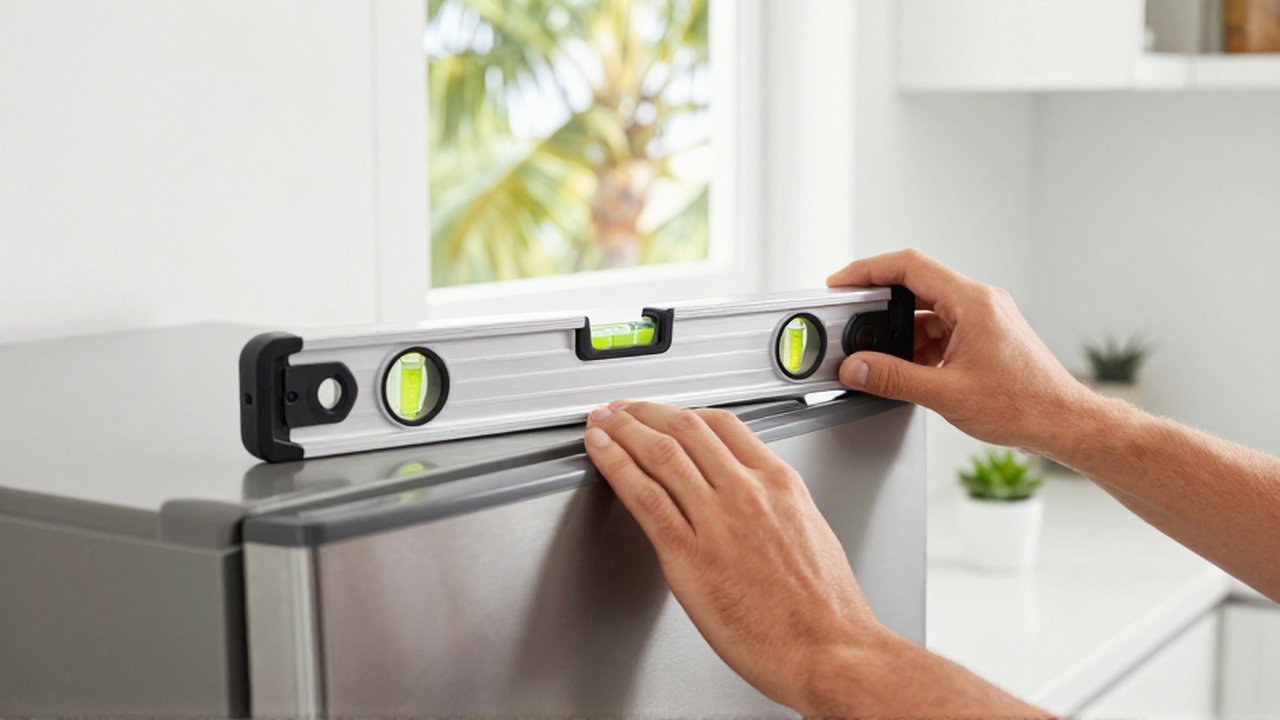
A refrigerator that is not perfectly level on the floor can vibrate significantly, creating a constant rattling or buzzing sound. This vibration can also cause the internal components to shift slightly, potentially leading to more complex mechanical issues over time.
To fix this, use a spirit level to check the appliance's balance on both the sides and the front. Most refrigerators have adjustable leveling legs at the front corners. Rotate these legs clockwise or counter-clockwise to raise or lower the unit until it is stable. It is often recommended to have a very slight backward tilt; this helps the doors close automatically via gravity, ensuring a tight seal that prevents cold air from escaping and wasting energy.
Identifying compressor and relay problems
The compressor is the "heart" of your refrigerator and is naturally louder than other parts. However, if the sound becomes excessively loud or is accompanied by frequent clicking, the issue is serious. A clicking sound often indicates that the compressor is trying to start but failing, which is frequently caused by a faulty start relay.
While the start relay is a relatively inexpensive part to replace, a failing compressor is a much more significant issue. If the compressor is making a loud, heavy thumping or grinding noise, it may be reaching the end of its functional life. In such cases, it is prudent to consult a professional technician to evaluate whether a repair is cost-effective compared to replacing the entire unit.
Frequently asked questions
Why does my refrigerator click every few minutes? This is often a sign that the compressor is attempting to start but cannot. It usually indicates a faulty start relay or a failing compressor. If the clicking persists, have the electrical components inspected.
Can a dirty refrigerator increase my electricity bill? Yes. When coils are dirty or fans are obstructed, the motor must run longer to reach the set temperature. This continuous operation significantly increases energy consumption.
How often should I clean the condenser coils? For most households, cleaning the coils every six months is ideal. However, if you have pets that shed a lot of hair, you may need to do it more frequently to maintain efficiency.
Is a humming sound always a bad sign? A low, steady hum is normal for a functioning compressor. However, if the hum becomes loud, erratic, or is accompanied by other noises like clicking or grinding, it indicates a mechanical problem that needs attention.
Leave a Reply